2026 Kia Carens Clavis : Kia has not officially confirmed a U.S. launch for the 2026 Carens Clavis, but the model is rapidly emerging as one of Kia’s most interesting family vehicles globally and is already shaping speculation about a future American debut.
Positioned as a three-row, feature-rich “recreational vehicle” (RV), it sits conceptually between an MPV and a crossover, aimed at families who want space, comfort, and tech without paying traditional minivan money.
A Global Family MPV Eyeing the U.S.
Kia currently anchors its U.S. three‑row lineup with the Sorento, Telluride and electric EV9, leaving a gap for a more compact, value‑oriented people‑mover.
The Carens Clavis, developed primarily out of India as a flexible “family RV,” effectively fills that role in emerging markets and naturally invites the question of if and when it will cross over to North America.
While Kia’s latest global product roadmap highlights new Telluride and Seltos variants for the U.S., it does not yet list the Carens Clavis by name, reinforcing that any 2026 American introduction would likely be a late addition or a lightly re‑worked regional version.
Still, the strong global push behind the Carens and the emergence of an electric Carens Clavis EV suggest Kia sees this platform as more than just a regional experiment.
Design: MPV Practicality, SUV Attitude
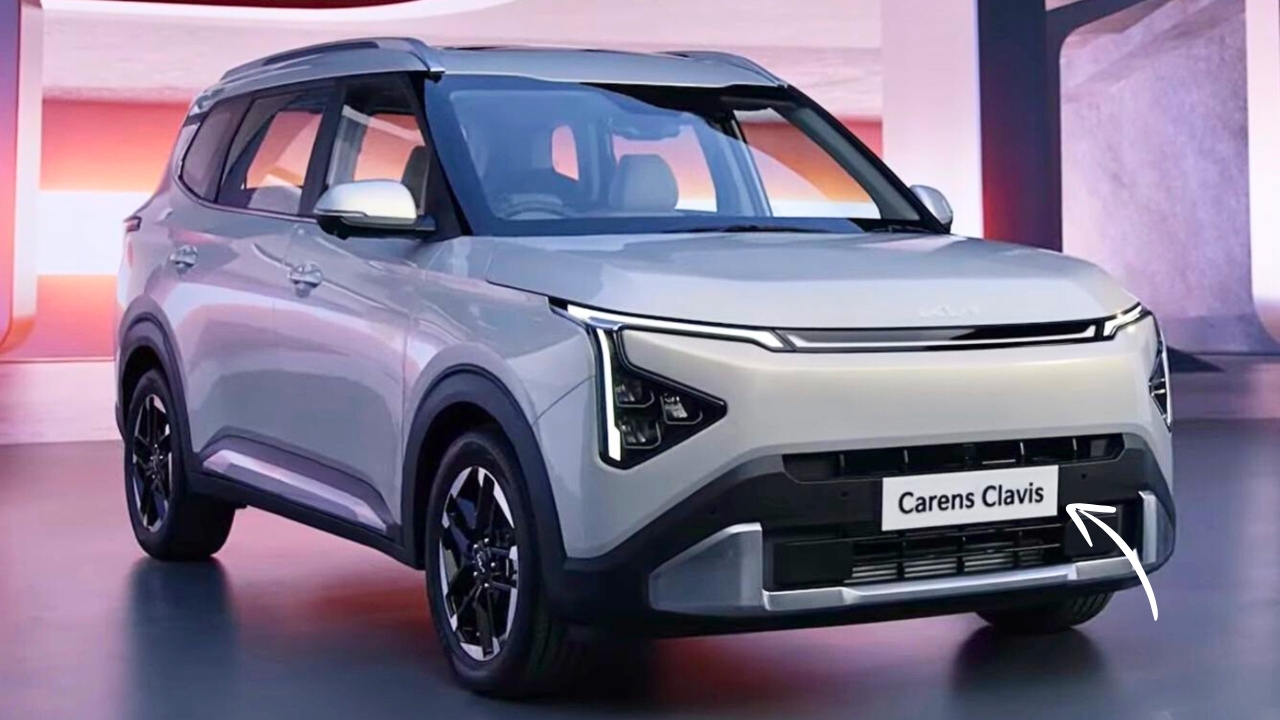
Visually, the 2026 Carens Clavis follows Kia’s newer design language with a bold fascia, “Digital Tiger Face” detailing and modern LED lighting signatures that deliberately echo the brand’s EV family.
Proportions are upright and purposeful, prioritizing interior space over a low, hatchback‑like stance, which will appeal to U.S. buyers coming from compact crossovers but needing a genuine third row.
Dimensions around 4.55 m in length with a 2,780 mm wheelbase help the Carens Clavis deliver generous cabin room while staying easier to maneuver than a full‑size minivan or three‑row SUV such as the Telluride.
Cladding, skid‑plate style bumpers and alloy wheels give it enough visual toughness to stand next to popular suburban crossovers in American dealer lots if it ever lands there.
Cabin and Tech: Built for Everyday Family Life
Inside, the Carens Clavis focuses on space, flexibility and a surprisingly premium tech layer for its class. In markets where it is already on sale, buyers get up to seven seats, multiple seating configurations and thoughtful storage solutions aimed at long‑haul family use.
Higher trims pair a panoramic or dual‑pane sunroof with a wide, connected display layout that merges the digital instrument cluster and infotainment into one sweeping screen, enhancing both aesthetics and usability.
Features such as ventilated front seats, Bose‑branded audio, wireless charging and connected‑car services push the Carens Clavis beyond basic transport into light‑premium territory, something U.S. shoppers increasingly expect even in entry three‑row models.
Powertrains and the EV Angle
Under the hood, current Carens and Carens Clavis variants in global markets rely on a family of 1.5‑liter petrol and diesel engines with manual, iMT and dual‑clutch automatic options, tuned more for efficiency than outright performance.
For an eventual U.S. version, Kia would almost certainly need to adapt this formula to local emissions and performance expectations, likely focusing on gasoline and perhaps mild‑hybrid assistance rather than diesel.
The more intriguing development is the Carens Clavis EV, an all‑electric derivative offered with 42 kWh and 51.4 kWh batteries, V2L capability and a suite of advanced convenience and ADAS features.
Built in India as part of Kia’s global electrification push, this EV variant showcases how the Carens platform could evolve into an affordable, compact three‑row electric family vehicle—exactly the kind of niche still emerging in the U.S. market.
Safety and ADAS: Family First
Safety is a major pillar of the Carens Clavis story, reflecting how family buyers worldwide, including in the U.S., now benchmark vehicles.
In existing markets, the model offers multiple airbags, ESC, hill‑start assist, rear passenger alert and a comprehensive Level 2 ADAS suite on higher trims, including autonomous emergency braking, lane‑keeping and blind‑spot functions.
This emphasis aligns well with Kia America’s broader portfolio, where high‑content safety tech has helped the brand’s three‑row SUVs and EV9 earn awards and sales momentum.
If the Carens Clavis were federalized for the U.S., crash‑structure calibration and software tuning would be key steps, but the underlying technology stack already looks competitive for a 2026‑era launch.
Market Position: Where It Would Fit in the U.S.
Should Kia green‑light the Carens Clavis for America, it would likely be pitched as an attainable, efficient three‑row alternative to compact crossovers and traditional minivans like the Toyota Sienna and Honda Odyssey, with a stronger value‑for‑money narrative.
Its blend of compact exterior dimensions, genuine three‑row usability and upscale tech could resonate with urban and suburban families who find full‑size SUVs excessive but have outgrown a two‑row crossover.
Pricing in its current markets is intentionally aggressive, undercutting many larger MPVs while delivering features often reserved for higher segments, a strategy Kia has used effectively with Telluride and EV9 in the U.S. as well.
2026 Kia Carens Clavis
If a 2026 U.S. Carens Clavis follows this template—possibly with a future hybrid or EV derivative—it could become a strong “gateway” three‑row in Kia showrooms.
In conclusion, the 2026 Kia Carens Clavis has not yet been confirmed for the U.S., but its global trajectory makes it a model American families should keep an eye on.
Also Read this – 2026 Dacia Jogger Unvelaed Powerful engine, features is elegent in low cost
With family‑first packaging, premium‑leaning features and an emerging EV counterpart, it encapsulates where practical people‑movers are headed—and hints at how Kia might eventually expand its three‑row story beyond today’s Sorento, Telluride and EV9 in the United States.