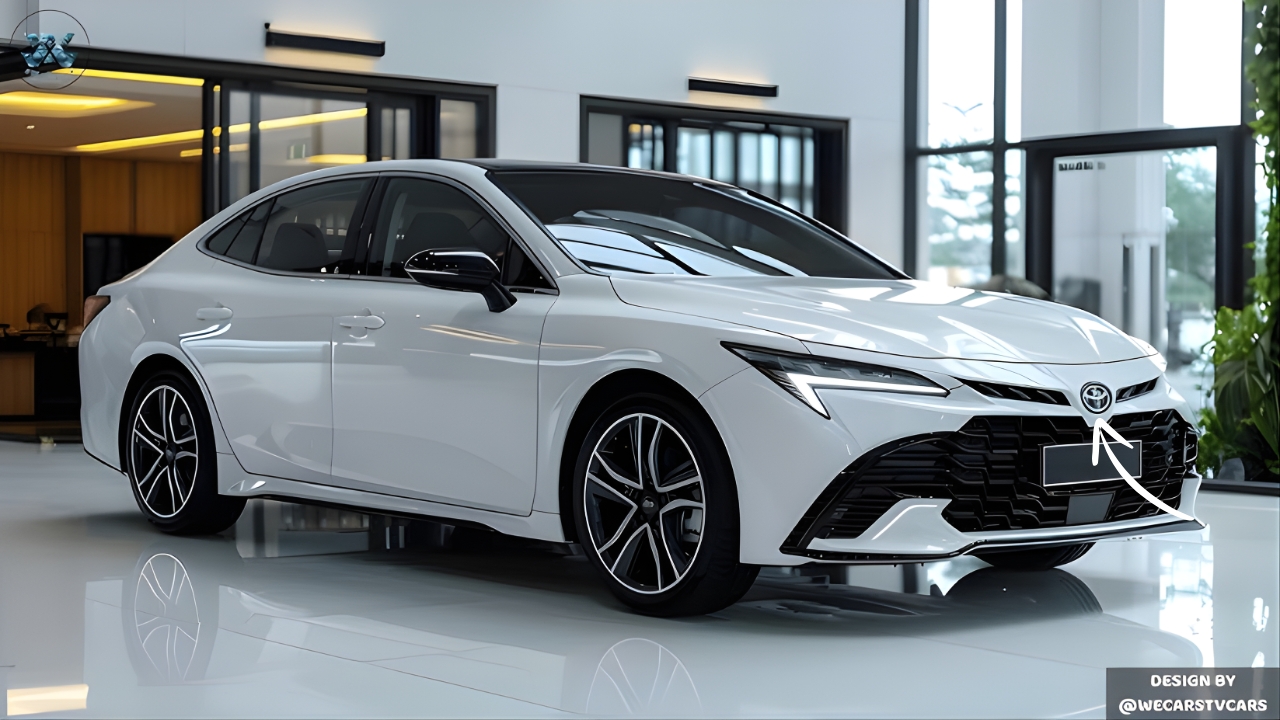
2026 Toyota Camry : The 2026 Toyota Camry arrives in the United States as a refined evolution of the all-new generation introduced for 2025, doubling down on efficiency, technology, and style while keeping the familiar midsize sedan formula that has made it a bestseller for decades.
Rather than reinventing the car after a full redesign, Toyota focuses on small but meaningful updates, including a new Nightshade Edition and an expanded hybrid-only strategy that signals how seriously the brand takes electrified everyday driving.
Hybrid-only powertrain strategy
For 2026, every Camry sold in the U.S. is a hybrid, using Toyota’s fifth‑generation Toyota Hybrid System paired with a 2.5‑liter four‑cylinder engine and one or more electric motors.
Front‑wheel‑drive models produce a combined 225 horsepower, while versions equipped with all‑wheel drive add an extra motor on the rear axle to raise output to 232 horsepower.
Power goes through a continuously variable automatic transmission, aiming for smooth, quiet acceleration rather than hard-edged performance.
Toyota positions this setup as a way to deliver both stronger acceleration and better fuel economy than the old non‑hybrid four‑ and six‑cylinder engines, which have now been dropped from the U.S. lineup.
Dealer and review information suggests the most efficient 2026 Camry variants target an estimated combined figure of up to about 51 mpg, matching the best numbers achieved by the 2025 hybrid models.
For many buyers, that means the Camry can function as an easy, no‑plug stepping stone between traditional gas cars and more advanced electrified options like plug‑in hybrids or EVs.
Design updates and the Nightshade Edition
Because the car was fully redesigned for the 2025 model year, the 2026 Camry does not get a radical exterior overhaul, but Toyota does introduce fresh visual twists to keep showroom interest high.
The headline change is the Nightshade Edition, a sportier appearance package based on the SE trim that brings dark trim pieces, gloss‑black wheels, and a more aggressive look without altering the mechanical setup.
The Nightshade Edition features black exterior elements on areas like the grille, mirror caps, fin-style accents, antenna, and rear spoiler, matched with black 19‑inch wheels for a stealthy stance.
Inside, this variant carries SE equipment but adds a black interior theme with contrasting accents, sport pedals, and a sport‑oriented steering wheel, pushing the Camry’s image a bit closer to that of a youthful, lifestyle‑focused sedan.
Outside the Nightshade, the broader lineup continues with comfort‑oriented LE and XLE trims and more athletic SE and XSE grades, some of which offer two‑tone paint or bolder wheel designs.
Interior comfort and tech features
The 2026 Camry’s cabin builds on the redesign that already modernized the dashboard layout, materials, and screens for 2025, so the overall look remains clean and horizontal with driver‑focused controls.
Many versions come with an 8‑inch central touchscreen, and higher trims or packages can upgrade that to larger displays, paired with digital instrument clusters on select models.
Available or standard features on various trims include dual‑zone automatic climate control, wireless smartphone charging, heated front seats, and connectivity options that mirror current consumer expectations in the segment.
Review outlets note that Toyota’s approach is to make the Camry feel more upscale without abandoning the practical storage spaces, straightforward ergonomics, and quiet ride that long‑time owners appreciate.
Different trims lean into distinct personalities: LE and XLE prioritize soft ride tuning and a calmer atmosphere, while SE, XSE, and Nightshade pair the hybrid system with firmer suspensions, sport seats, and racier trim details.
For families and commuters alike, the goal is to offer a car that feels familiar but not dated, especially as crossovers continue to dominate much of the U.S. market.
Performance, driving feel, and safety
Underneath, the 2026 Camry carries over the same basic chassis and hybrid setup introduced with the current generation, emphasizing a balance between efficiency and responsive handling.
Front‑wheel‑drive variants are quoted at around 6.8–6.9 seconds for the 0–60 mph run, which is brisk enough for highway on‑ramps and passing maneuvers and noticeably livelier than older four‑cylinder Camrys.
All‑wheel‑drive models automatically send power to the rear axle when slip is detected, offering extra security for drivers in wet or snowy regions while keeping weight and complexity in check.
Toyota Safety Sense 3.0 continues as standard across the 2026 range, providing features such as adaptive cruise control, lane‑keeping assistance, pre‑collision systems, and other driver aids that help the Camry remain competitive with rivals like the Honda Accord and Hyundai Sonata.
The company also bundles in updated infotainment and convenience tech depending on trim level, reflecting rising expectations for connected services and over‑the‑air‑style updates in mainstream cars.
For shoppers who have driven older Camrys, the mix of quiet hybrid operation, improved ride and handling, and a more comprehensive safety suite makes the 2026 model feel like a noticeable step up.
U.S. release timing and pricing expectations
The 2026 Camry is scheduled to reach U.S. dealers in fall 2025, with some dealer and industry sources suggesting late summer or early fall arrivals as production ramps up.
Toyota has indicated that official pricing details will be announced closer to launch, but analysts expect base MSRPs to land near current 2025 hybrid pricing, which ranges from the upper‑20‑thousand‑dollar band into the mid‑30‑thousands depending on trim and equipment.
Because the Camry Hybrid is built in the United States, commentators also note that it may avoid some of the steeper import‑related costs affecting other vehicles, potentially helping Toyota keep it competitively priced even as tariffs and supply challenges continue.
Early commentary from dealers suggests that some buyers may wait for the 2026 cars to appear so that remaining 2025 inventory is discounted, while others target the new Nightshade and specific feature combinations not previously available.
The staggered rollout pattern, where production starts in early fall and inventory builds toward the end of the year, is expected to mirror what happened when the 2025 generation first arrived at showrooms.
2026 Toyota Camry
The 2026 Toyota Camry in the U.S. does not chase headlines with radical redesigns or wild power figures; instead, it calmly doubles down on being a hybrid‑only, well‑equipped midsize sedan that fits a broad range of drivers.
Also Read this – 2026 Subaru Baja New reborn with rugged design, smarter tech, mileage is high
With a new Nightshade Edition, a mature but still fresh design, and a focus on efficiency and safety, it reinforces the Camry’s role as a default choice for people who want a dependable car that quietly keeps up with changing technology and environmental expectations.